Frame & Roof: Wattle Basket and Da Vinci Bridge Rafters
Wall Framework: Wattle Basket
Section titled “Wall Framework: Wattle Basket”- Vertical posts: 8–10cm diameter eucalyptus, 2.5m height, 40cm spacing
- Horizontal weavers: 3–5cm diameter, woven between verticals
- Wattle basket structure: creates cavity for straw-clay insulation
- Integration with gabion base: posts set into stone fill, wedged tight
- Top plate connection: horizontal beam ties posts, receives roof rafters
- Corner posts: heavier gauge (10–12cm), anchored deep into gabion
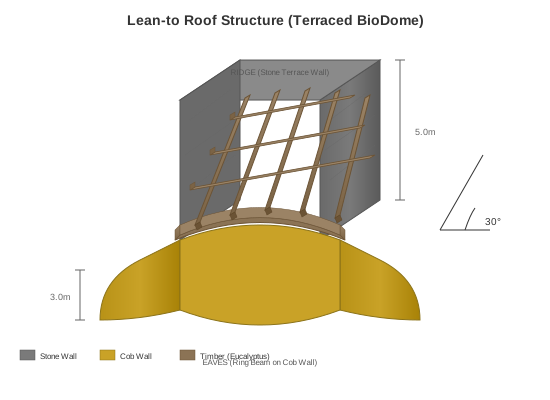
Roof: Da Vinci Bridge Rafters
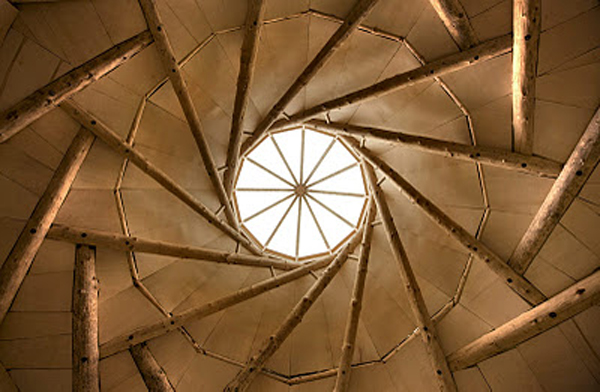
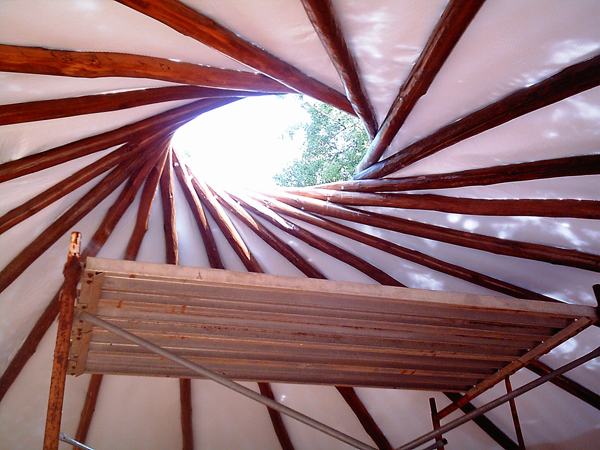
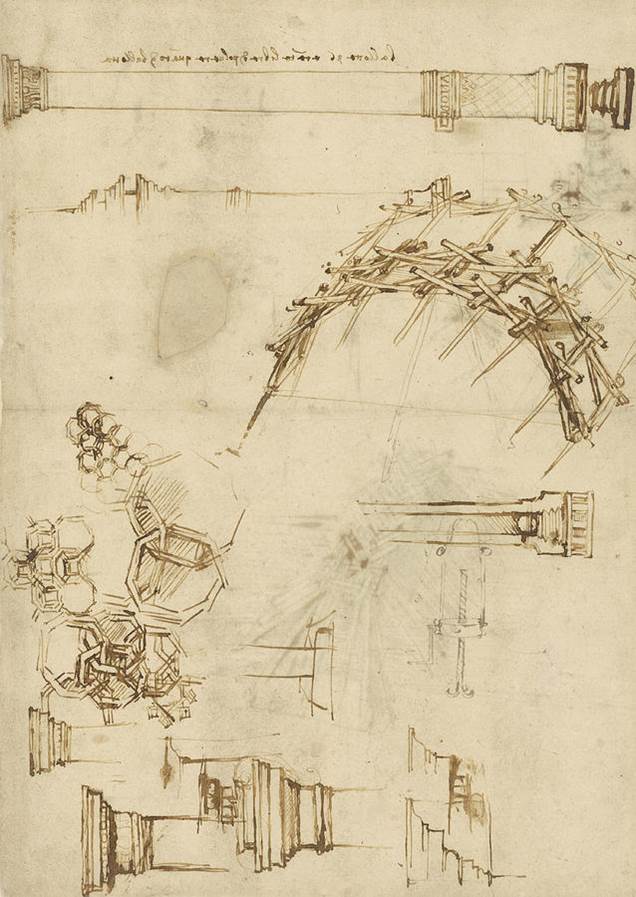
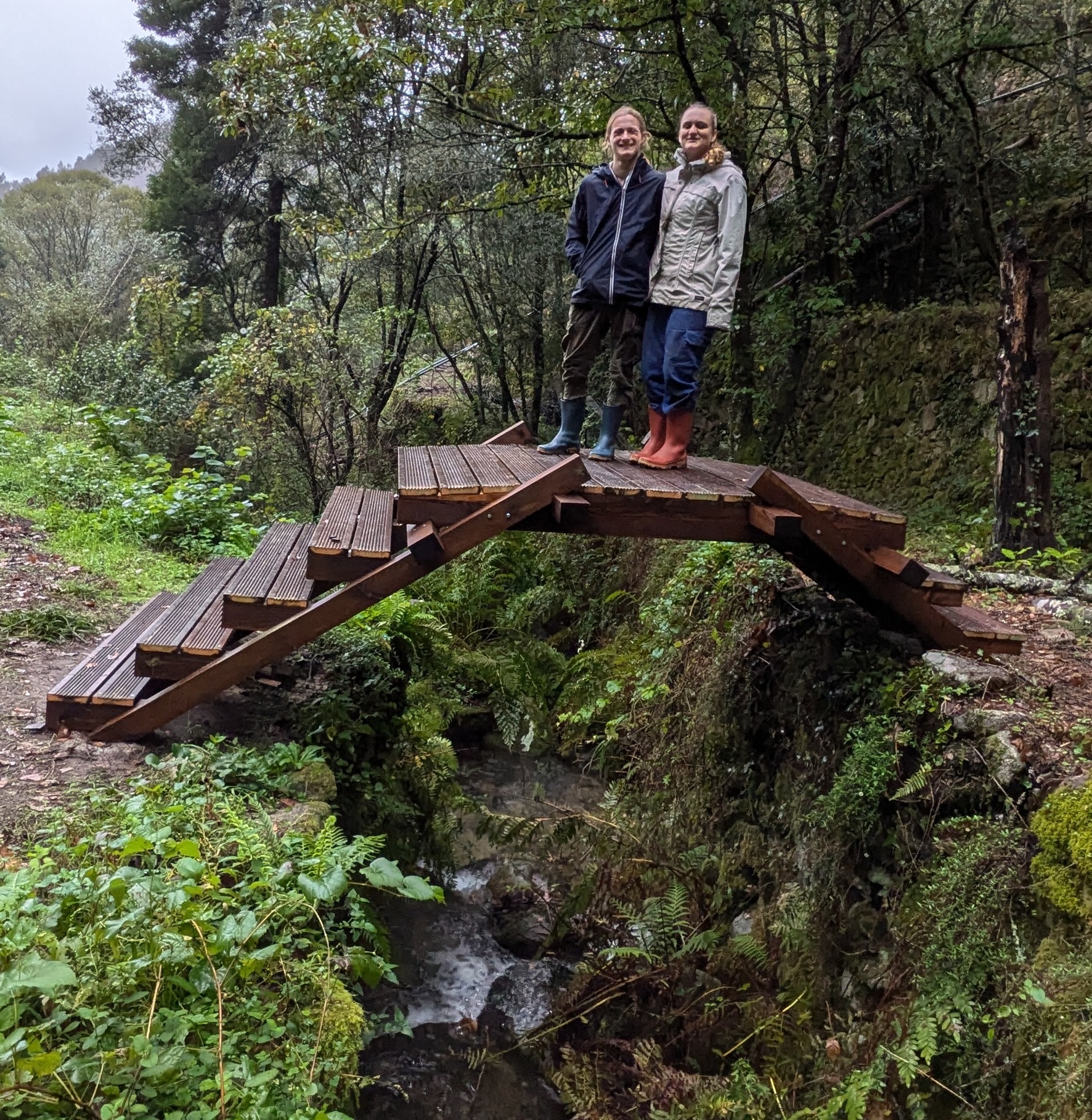
Section titled “Roof: Da Vinci Bridge Rafters”- Da Vinci bridge principle: interlocking A-frame pairs, no central ridge beam
- Rafter sizing: 10–12cm diameter eucalyptus, 3.5m length per rafter
- Interlocking geometry: notched laps where rafters cross, locked by gravity and compression
- Purlin layout: 5–7cm diameter horizontal poles, 50cm spacing, support EPDM deck
- Connection to wall plate: rafter feet notched over plate, pegged with hardwood dowels
- Gable ends: infilled with wattle weave or fixed glazing