Greenhouse BioDome
A 6-metre dome greenhouse built from eucalyptus poles and greenhouse plastic. Two people with hand tools can raise one in a long weekend for under €300. It’s the easiest way to start building with eucalyptus — and the frame you build here can later become a permanent insulated dwelling if you choose to take it further.
How It Works
Section titled “How It Works”The dome is made from 14 long, flexible eucalyptus poles — each one spanning the full 6-metre diameter. They’re paired into 7 arches that cross at the top, forming a shape called a catenary curve (the natural shape of a hanging chain, flipped upside down). You don’t need to force the poles into a precise mathematical shape. You bend each pole by hand during installation, and gravity does the rest — the poles find their own curve and the structure stays in compression, which is what timber does best.
Five horizontal wattle rings woven between the arches lock the frame together. Then greenhouse plastic drapes over the whole thing, lashed down with battens and rope. That’s it — poles, rings, plastic.
What you need:
- Site: A roughly level clearing, 7m across minimum (6m dome + workspace)
- People: 2 (one to hold, one to lash — the poles are long)
- Tools: Drawknife or machete, shovel, wire cutters, tape measure, spirit level, scissors or utility knife
- Time: 1 week of pole prep, then 2–3 days of building
Before the Build Weekend
Section titled “Before the Build Weekend”Pole preparation for this design uses the Regenerative Default protocol — char + linseed oil, no borax. See the Treatment Guide for the full reasoning. The Greenhouse BioDome is a plastic-skinned structure on a 3–4 year re-skin cycle, the frame is fully accessible, and a 15–20 year pole life from charring alone is the right trade — chemical-free, faster prep, simpler workflow.
If you’re building in a high-pest area (lower elevation, coastal Portugal) or you want to push past 20 years before any pole maintenance, follow the Extended-Life Protocol in the Treatment Guide instead — that adds a 72-hour borax soak between charring and bending.
-
Harvest poles
You need 16 arch poles (14 + 2 spares), about 30 ring poles, and 3 door frame posts. Select young, straight eucalyptus trees — 5–8 years old gives the best flexibility for bending. If you’re clearing eucalyptus from your land, see the Harvesting Guide for details on selecting trees and treating stumps to prevent regrowth.
- Arch poles: 8–10cm butt diameter, ~11.6m length, E. globulus (blue gum)
- Ring poles: 5–7cm diameter, 2–4m length
- Door posts: 8–10cm diameter, ~2m length
-
Debark within 48 hours
Strip all bark with a drawknife or flat-blade scraper. Work from butt to thin end, following the grain. Bark left on traps moisture and accelerates rot — debarked poles last years longer.
-
Char the bases (8–10mm depth)
Torch the bottom 50cm of every arch pole and door post until the char layer reaches 8–10mm depth — you should see alligator-scale cracking. Brush off loose char with a stiff wire brush. The carbonised layer is your primary defence in the buried section, where rot would otherwise begin first. See the Treatment Guide for the deep-char technique.
-
Score arch poles for bending
Using a drawknife or machete, score shallow cuts (1–2mm deep) every 15cm along the outer face — the face that will be on the outside of the curve when bent. Concentrate scoring on the middle third of the pole, where the bend will be tightest. This relieves tension in the outer wood fibres so the pole bends smoothly rather than cracking.
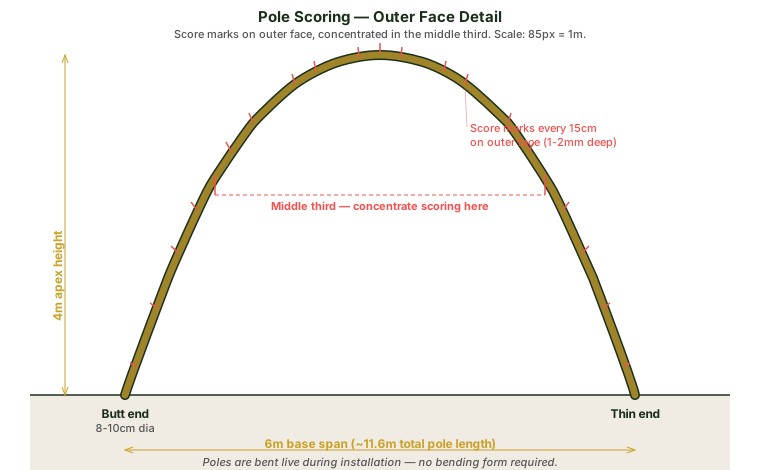
Pole scoring detail: shallow cuts every 15cm on the outer face, concentrated in the middle third where the bend is tightest -
Sort and pair
Sort all 16 arch poles by butt diameter. Pair them so each arch has two poles of similar size. Number each pair 1–7 (plus 2 spares). Within each pair, mark the poles so butt ends go on opposite sides of the dome — this balances the taper across each arch (the thick end of one pole sits beside the thin end of the other at each foundation point).
-
(Optional) Borax soak — 72 hours minimum
Skip this step if you’re using the Regenerative Default. If you’ve decided on the Extended-Life Protocol, do the borax soak now (after charring, before bending). Recipe: 12.5kg borax + 8.3kg boric acid per 1,000 litres of water (~2% solution). See the Treatment Guide for the trough design and full procedure. Weight poles below the surface; soak 72 hours minimum, longer is better.
Day 1 — Foundation
Section titled “Day 1 — Foundation”Gravel-filled postholes keep the pole bases out of standing water and allow drainage — the simplest foundation that works. Each posthole takes about 15 minutes.
-
Mark the circle
Drive a stake at centre. Tie a 3m string to it and scribe a 6m diameter circle on the ground. Walk the circle and clear any rocks, roots, or debris.
-
Mark posthole positions
You need 15 postholes evenly spaced around the circle (every ~1.26m). The easiest way: mark north, then every 24 degrees around (use a protractor or the 15-peg string method — tie 15 equal-length strings from the centre and space them by eye, then adjust until the gaps look even). Skip one position for the door — choose the side that faces your access path or prevailing sun.
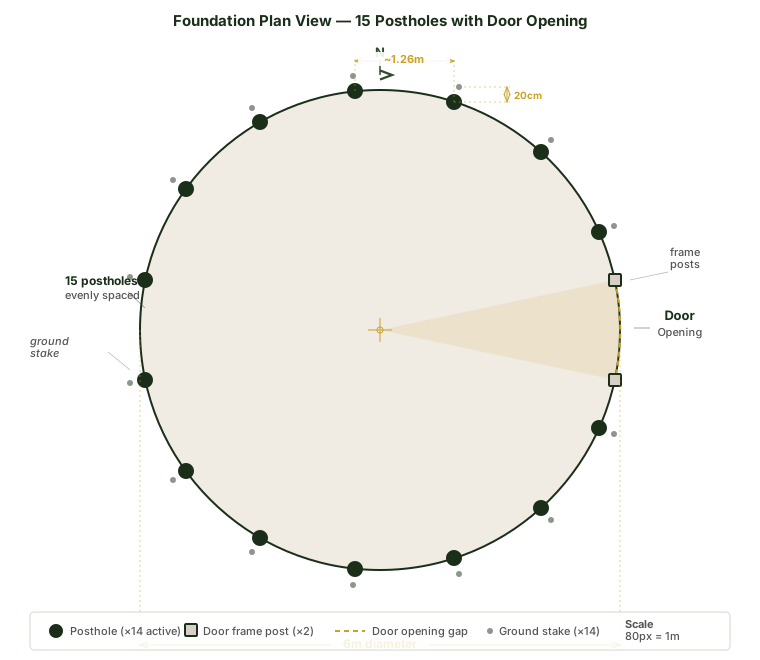
Foundation plan view: 15 postholes at ~1.26m spacing, door opening, and ground stake positions -
Dig postholes
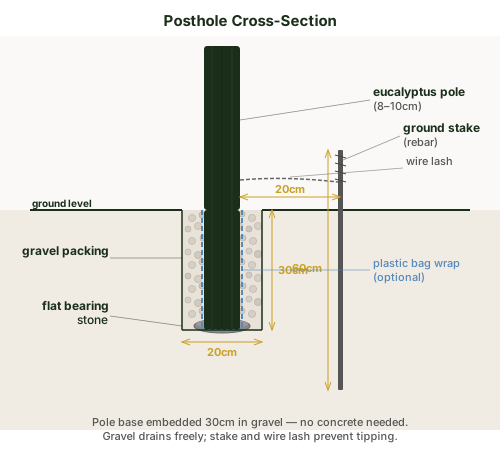
Each hole: 30cm deep, 20cm wide. If your soil is very clay-heavy or waterlogged, go 40cm deep and add an extra 10cm of gravel at the bottom.
-
Fill with gravel
Drop a flat stone at the bottom of each hole (this is the bearing surface — keeps the pole end off raw earth). Fill with 15cm of gravel or crushed stone. The pole butt will sit on this gravel bed, with more gravel packed around it after the frame goes up.
-
Install door frame
At the door opening, set two vertical posts (8–10cm diameter, ~2m above ground + 40cm buried) into postholes on each side of the gap. Pack firmly with gravel. Lash a horizontal crosspiece at ~2m height between them with galvanized wire. This is your door frame.
-
Drive ground stakes
At each posthole position, drive a 60cm rebar stake or hardwood stake vertically into the ground, 20cm from the hole on the outside of the circle. These stakes will anchor the pole bases against wind uplift once the frame is up.
Day 2 — Frame and Wattle
Section titled “Day 2 — Frame and Wattle”This is the most physical day. Two people can raise all 7 arches and install the wattle rings in a full day of work.
Raising the Arches
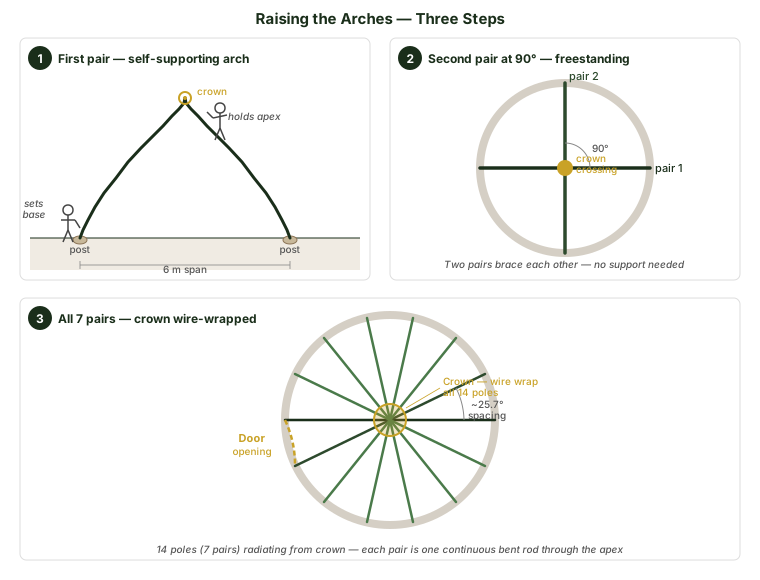
Section titled “Raising the Arches”Each arch is made from two poles that span the full diameter of the dome, crossing at the top. You bend them by hand during installation — no bending forms, no jigs. The poles are green and scored, so they flex into a smooth curve and hold that shape as they dry in place.
-
First pair
Take the first pole of Pair 1. Set its butt end into a posthole. Two people walk the pole up from the other end, bending it live into an arc as they go — the pole curves naturally under its own weight. One person holds the pole at the apex while the other sets the thin end into the opposing posthole across the diameter.
Now install the second pole of Pair 1 from the opposite side — its butt end goes into the posthole next to where the first pole’s thin end landed, and its thin end reaches the posthole next to the first pole’s butt end. This way the thick and thin ends alternate around the perimeter.
Lash both poles together at the crown with galvanized wire, wrapping tightly. The completed arch is self-supporting.
-
Second pair (perpendicular)
Install the second pair at 90 degrees to the first, using exactly the same technique. Where the four poles cross at the apex, lash them together with galvanized wire. The two arches now stabilise each other — the structure is freestanding.
-
Remaining five pairs
Install five more pairs at even spacing around the circle, skipping the door position. Each new pair is walked up, bent live, and lashed to the existing poles where they cross at the crown. The structure gets more rigid with each pair added.
-
Secure the crown
Once all 7 pairs are up (14 poles total), wrap the entire crown crossing with galvanized wire in a tight spiral. This zone — roughly 30cm across, where all 14 poles overlap — is the structural keystone of the dome. Wrap it well.
-
Lock pole bases
Pack more gravel tightly around each pole butt in its posthole. Then wire-lash each pole to its adjacent ground stake for wind uplift resistance. Optionally, wrap the bottom 30cm of each pole in a plastic bag before packing the final gravel — a cheap moisture barrier that adds years of life.
Wattle Rings
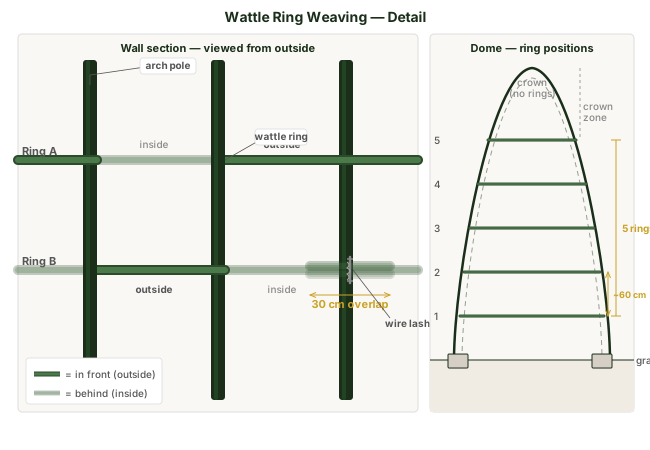
Section titled “Wattle Rings”Wattle is one of the oldest building techniques — horizontal poles woven alternately inside and outside of vertical supports. Here the arch poles are the verticals, and you weave horizontal ring poles between them to create a lattice. Five rings are enough to support greenhouse plastic and prevent billowing in wind.
-
Harvest ring poles fresh
Cut ~30 ring poles (5–7cm diameter, 2–4m length) the same morning you plan to weave them. Green eucalyptus becomes too stiff to weave within 24–48 hours in Portuguese summer sun.
-
Install 5 horizontal rings
Starting at about 60cm above ground level, weave a ring pole horizontally around the dome, alternating inside and outside of each arch pole as you go. Where a ring pole runs out, overlap the next one by 30cm and wire-lash the join. Space the 5 rings roughly evenly — about 60cm apart vertically. The highest ring sits about 60cm below the crown.
-
Check ring tension
Each ring should be snug against the arch poles, not loose. Push on the wattle between rings — it should flex slightly but not flap. If any section feels loose, add a short extra ring pole in that zone.
Day 3 — Plastic and Ventilation
Section titled “Day 3 — Plastic and Ventilation”The fastest day. Two people can cover the dome in greenhouse plastic, frame the door, and set up ventilation in half a day.
Materials
Section titled “Materials”- Greenhouse plastic: 150μm (6mil) UV-stabilised polyethylene. Buy a single roll — standard sizes are 8m wide × 25–50m long. You need roughly 2 pieces, each about 8m × 8m, to cover the dome with overlap.
- Greenhouse repair tape: UV-resistant poly tape for joining sheets and patching.
- Twine or poly rope: ~100m for lashing battens.
- Split-pole battens: ~20 pieces of thin (2–3cm) eucalyptus or other wood, 1–1.5m long. Split from offcuts — these press the plastic against the wattle rings.
Covering the Dome
Section titled “Covering the Dome”-
Cut two sheets
Roll out the plastic on flat ground. Cut two pieces roughly 8m × 8m each (adjust if your roll is wider or narrower — you need enough to drape from the crown to ground level on each side, with 50cm extra at the base for anchoring).
-
Drape the first sheet
Choose a calm day — wind is your enemy. Drape the first sheet over the dome from the crown, covering one half. Let the excess pool at the base. The sheet should extend past the crown by ~1m to overlap with the second sheet.
-
Drape the second sheet
Drape the second sheet over the other half, overlapping the first sheet by at least 50cm at the ridge (the line running over the crown). Tape the overlap with greenhouse repair tape — run a continuous strip along the full length of the join.
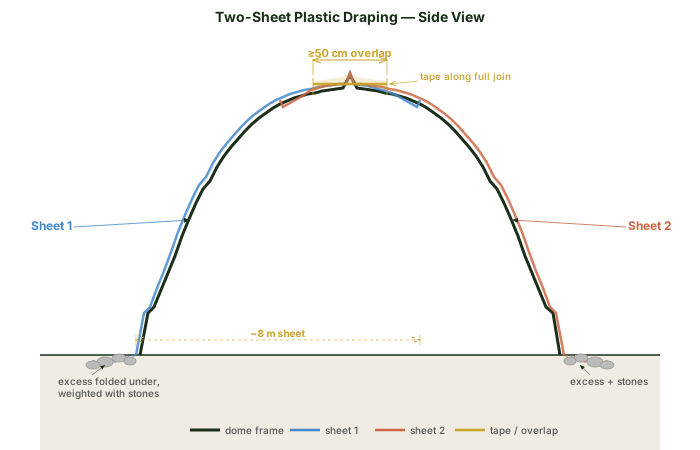
Two-sheet draping: sheets overlap by at least 50cm at the ridge, taped along the full join, excess weighted at the base -
Lash to wattle rings (sandwich method)
At each of the 5 wattle ring levels, lay a split-pole batten over the plastic on the outside, pressing it against the wattle ring underneath. Lash the batten to the ring with twine, threading through gaps in the plastic as little as possible. The batten sandwiches the plastic between itself and the ring — no staples or punctures needed. Work your way around the dome at each ring level.
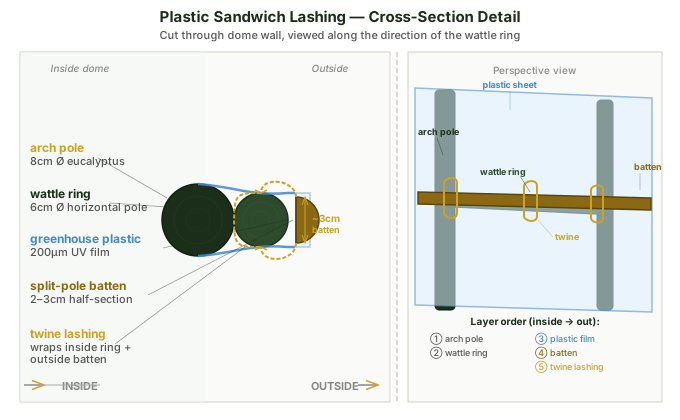
Sandwich lashing detail: batten presses plastic against the wattle ring, held by twine — no punctures needed -
Anchor the base
You have two options:
- Trench method: Dig a shallow trench (15cm deep) around the base, lay the excess plastic into it, and backfill with soil. Permanent, secure, but harder to open for ventilation.
- Weight method: Fold the excess plastic under and weight it with a continuous line of stones or sandbags. Easier to lift sections for ventilation. This is the recommended method.
-
Frame the door
Cut the plastic at the door opening, leaving 30cm extra on each side. Fold the edges over and tape them to themselves for reinforcement (raw-cut plastic tears easily). Create a door flap: cut a piece of plastic 20cm wider than the opening and 20cm taller. Tape or lash it across the top of the door frame so it hangs down as a curtain. Weight the bottom edge with a thin pole sewn into a fold — this keeps it closed in wind but lets you push through.
Ventilation
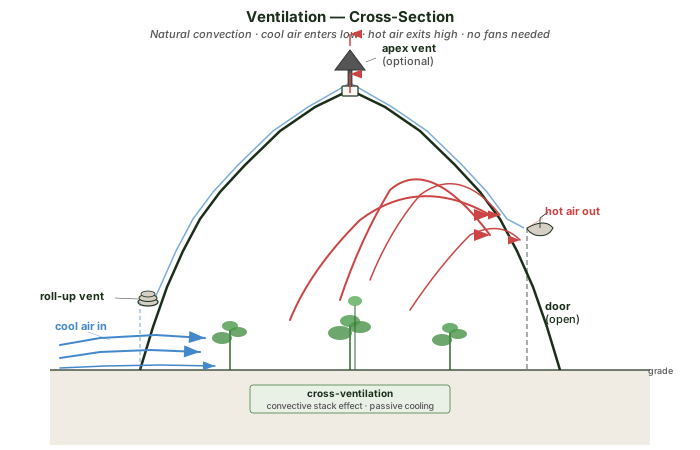
Section titled “Ventilation”A sealed plastic dome will overheat on any sunny day. You need cross-ventilation.
-
Roll-up base: On the side of the dome opposite the door (the leeward side in your prevailing wind), leave the base plastic unanchored for a 2–3m section. Roll it up to waist height on warm days and secure with clips or ties to the lowest wattle ring. This creates a low inlet; hot air rises and exits through the door or an apex vent.
-
Apex vent (optional): At the crown, cut a 30cm diameter hole in the plastic. Tape the edges for reinforcement. Cover with a small cone of plastic on a short post (a pot lid on a stick) to shed rain while allowing hot air to escape around the edges. Not essential if you use the roll-up base + open door method, but it improves airflow significantly on still days.
-
Door: On hot days, tie the door flap open. Combined with the roll-up base on the opposite side, this gives you through-ventilation across the full diameter.
Bill of Materials
Section titled “Bill of Materials”| Item | Qty | Specs | Est. Cost |
|---|---|---|---|
| Eucalyptus arch poles | 16 (14 + 2 spares) | 8–10cm dia, ~11.6m, green | €0–50 |
| Eucalyptus ring poles | ~30 | 5–7cm dia, 2–4m, green | €0–15 |
| Door frame posts | 3 | 8–10cm dia, ~2m, treated | €0–10 |
| Linseed oil (raw) | 1.5L | For above-ground sealing | €12–22 |
| Borax + boric acid (optional) | 10kg | Technical grade — Extended-Life Protocol only | €0 / €15–25 |
| Gravel / crushed stone | 0.3m³ | For postholes | €10–20 |
| Greenhouse plastic | ~130m² | 150μm UV-stabilised polyethylene | €40–80 |
| Greenhouse repair tape | 1 roll | UV-resistant poly tape | €10–15 |
| Galvanized wire | 50m | 3mm diameter | €25–35 |
| Twine / poly rope | 100m | UV-resistant preferred | €10–15 |
| Ground stakes | 15 | 60cm rebar or hardwood | €15–25 |
| Total (Regenerative Default) | €122–287 | ||
| Total (Extended-Life Protocol) | €137–312 |
Maintenance
Section titled “Maintenance”Monthly: Walk the perimeter. Check that base anchoring is secure, no plastic has torn free from battens, and no wattle rings have come loose. Re-lash anything that’s shifted.
Seasonally: Before winter storms, check all wire lashings at the crown and pole bases. Tighten any that have loosened as poles dry and shrink (eucalyptus shrinks 4–8% radially in the first year).
Every 3–4 years: Replace the greenhouse plastic. UV-stabilised plastic lasts 3–4 years in Portuguese sun before it becomes brittle. Replacement is a two-person, half-day job — strip old plastic, drape new sheets, re-lash battens. Budget €40–80 each time.
Every 5–10 years: Reapply hot linseed oil to all above-ground pole surfaces (60–70°C, brushed on). With the Regenerative Default protocol this is the substitute for the borax soak — don’t let it lapse. Easiest moment is during a plastic re-skin year, when the frame is fully exposed.
What’s Next — Upgrading to a Permanent Dwelling
Section titled “What’s Next — Upgrading to a Permanent Dwelling”The Greenhouse BioDome is designed as the starting point of a larger journey. The arch frame, crown lashing, wattle rings, and door frame you’ve just built are the exact same skeleton used in the Standard BioDome — a fully insulated, weatherproof dwelling with a 25–35 year lifespan. When you’re ready to make that leap:
-
Remove the plastic
Strip the greenhouse plastic. Reuse it as ground cover, pond liner, or on another structure.
-
Build the gabion ring foundation
A gabion ring — stone-filled wire cages forming a 6m circle — replaces the gravel postholes with a proper foundation that includes integrated drainage. The existing postholes get absorbed into the gabion fill. This is the one component that doesn’t carry over directly, but you’re not demolishing anything.
-
Add vertical wattle infill
Weave ~200 vertical infill poles between the existing horizontal rings to create a dense lattice. This provides the substrate for the insulating wall layers that follow. See the Wattle Weave guide.
-
Build up the insulated shell
The Standard BioDome build guide picks up from here: light straw-clay insulation, a waterproof EPDM membrane, stone skirt exterior, lime plaster interior. The full conversion adds 4–5 weeks of work and €1,500–5,000 in materials — but you end up with a permanent home.
The best time to start the conversion is after 2–3 years, when the poles have fully dried and stopped moving. By then you’ll know the dome intimately — every quirk, every settling point — and the conversion will go smoothly.