Dome Frame
The dome frame is the skeleton of the structure. Sixteen full-span eucalyptus poles — each running the entire diameter of the dome — are paired into eight arches. Seven pairs cross diametrically. The eighth pair — the door-framing pair — starts at the two sockets opposite the door (one butt end each), crosses at the crown, and fans out on the door side so its thin ends land at the two sockets flanking the entrance. Each pole is bent by hand during installation: no bending forms, no weeks of drying on jigs. The poles are scored, soaked if needed, and walked up into position. Once lashed together at the crown, all eight pairs support each other and the wattle weave fills the spaces between them.
Pole Specifications
Section titled “Pole Specifications”- Quantity: 16 main poles (plus 2 spares)
- Diameter: 8-10cm at butt end
- Length: ~11.6m (two 40cm embedments + 10.8m visible arc)
- Species: E. globulus (blue gum / eucalipto-comum) — this is the eucalyptus in Portugal. It covers over 800,000 hectares and is almost certainly what you will be clearing. Denser and stiffer than some eucalypts, but bends well when green and properly scored. In highland areas (Beira Alta, Trás-os-Montes), you may also find E. nitens (shining gum), which bends slightly more easily.
- Condition: Must be green — harvest within 2 weeks of use. Must be flexible enough to bend by hand during raising.
Preparing the Poles
Section titled “Preparing the Poles”-
Select and Pair
Sort all 16 poles by butt-end diameter. Pair them so that each arch has two poles of similar size. Within each pair, mark the poles so their butt ends will be installed on opposite sides of the dome — this balances the taper across the arch. Number each pair (1-8) with a marking crayon or wire tag. Pair 8 is the door-framing pair — each butt end goes into its own socket at the back of the dome (the two sockets directly opposite the door).
-
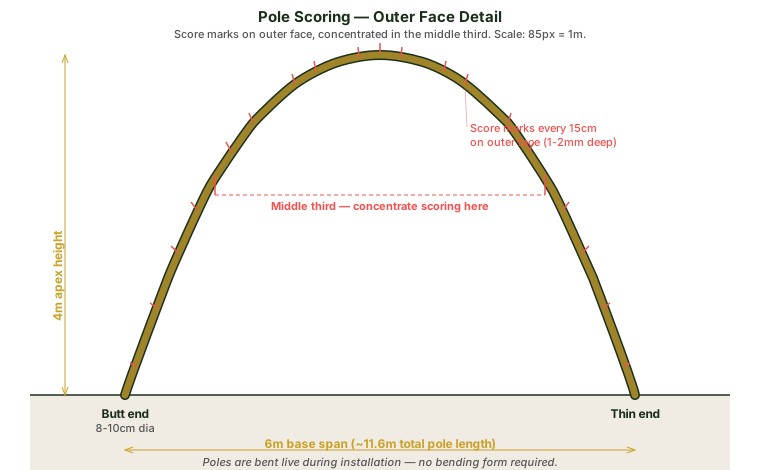
Score the Outer Face
Using a draw knife or machete, score shallow cuts (1-2mm deep) every 15cm along the outer face — the face that will be on the outside of the curve when the pole is bent. Concentrate scoring on the middle third of the pole, where the bend is tightest. This relieves tension in the outer fibers and prevents cracking during live bending.
-
Soak If Needed
If poles have been cut more than 3 days ago or feel stiff when flexed by hand, soak in a water trough for 48-72 hours before raising. Freshly cut poles (within 2-3 days) typically have enough moisture to bend without soaking.
Raising the Arches
Section titled “Raising the Arches”With all poles scored and paired, assemble the dome frame. This is a two-person job.
-
First Pair
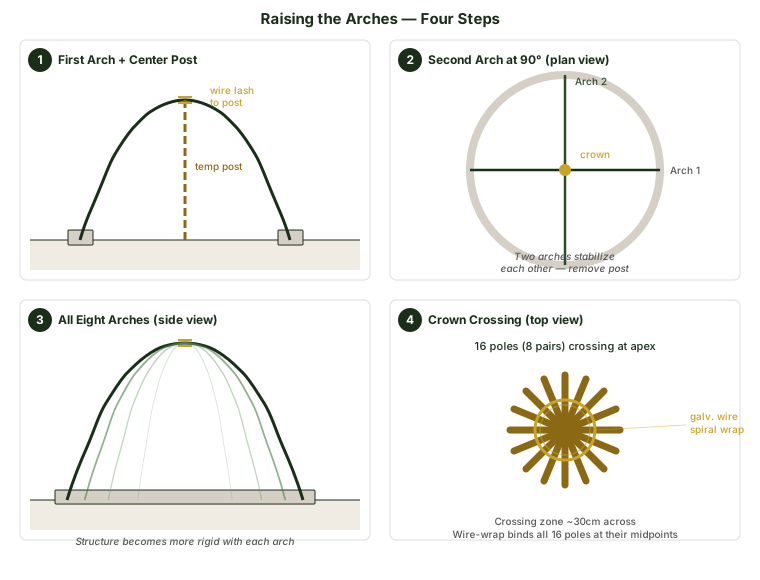
Take the first pole of Pair 1. Set its butt end into a foundation socket. Two people walk the pole up, bending it live into an arc. One person holds the pole at the apex while the other sets the thin end into the opposing socket across the diameter. Now install the second pole of Pair 1 from the opposite side — its butt end goes into the socket next to where the first pole’s thin end landed, and its thin end reaches the socket next to the first pole’s butt. Lash both poles together at the crown with galvanized wire. The completed arch is self-supporting.
-
Second Pair (Perpendicular)
Install the second pair at 90 degrees to the first. Walk each pole up the same way. Where the four poles cross at the apex, lash them together with galvanized wire. The two pairs now stabilize each other and the structure is freestanding.
-
Remaining Standard Pairs
Install five more standard pairs (10 poles) at equal spacing (every 22.5 degrees), skipping the door position. Each new pair is walked up, bent live, and lashed to the existing poles where they cross at the crown. The structure gets more rigid with each pair added.
-
Door-Framing Pair
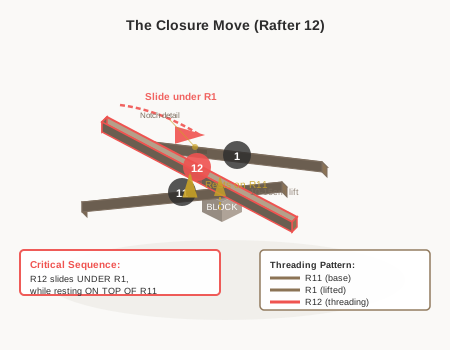
Install the eighth pair — the door-framing pair. Each butt end goes into its own socket — the two sockets side by side directly opposite the door. Walk the first pole up and over the crown, but instead of landing in the skipped door socket, angle its thin end to the flanking socket on one side of the door opening. Walk the second pole from the adjacent back socket, over the crown, and angle its thin end to the flanking socket on the other side. The two poles fan apart on the door side, naturally forming an arch over the entrance. Lash both to the crown crossing with the other 14 poles.
-
Wind Porch Frame
Install the wind porch frame immediately after the door-framing pair. Set four treated chestnut or pine corner posts (10cm diameter) plumb vertical into the U-shaped gabion extension: two inner posts at the dome face on each side of the door opening, two outer posts at the far end of the gabion arms. Posts rise to 1.5m — the arch spring line. Connect each side’s inner and outer posts with a horizontal eave pole at 1.5m. Bend an arch frame from the left post top, over the peak, to the right post top — one arch at the inner end (peak at 2.2m, matching the dome door arch) and one at the outer end (peak at 2.0m, slightly lower for drainage). Install 5 arch rafters curving from the inner arch to the outer arch, forming a barrel-vault roof. The result is an arched tunnel projecting 1.2m outward from the dome, with a profile matching the door.
-
Secure the Crown
The crown crossing — all 16 poles lashed together as the structural keystone Once all 8 pairs are up, wrap the entire crown crossing with galvanized wire in a tight spiral. This zone — roughly 30cm across, where all 16 poles (8 pairs) overlap — becomes the structural keystone of the dome.
-
Lock Pole Bases
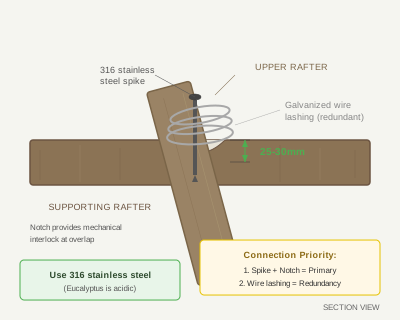
Saddle notch: a traditional joint for secure pole-to-pole connections Pack each foundation socket tightly with gravel around the pole base. Then wire-lash each pole to the gabion mesh below it for uplift resistance in high winds.
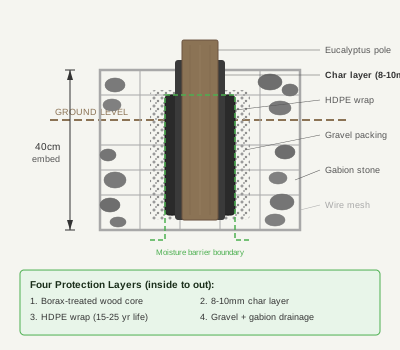
Four protection layers at pole-gabion connection: borax-treated core, char layer, HDPE wrap, and gravel packing